

For years, luxury was defined by access. The ability to secure the impossible reservation, the private viewing, or the last remaining suite was the benchmark of elite service. That era has quietly ended.
In 2025, access is no longer scarce. Information, connections, and options are abundant at the highest levels. What has become truly limited is something far more valuable: cognitive bandwidth.
Ultra-high-net-worth individuals are no longer focused on outsourcing tasks alone. Increasingly, they are delegating decision-making itself, transferring responsibility for complex, high-stakes areas of life that once demanded personal oversight. This shift reflects a deeper evolution in how time, focus, and well-being are valued at the top.
Below are the key areas modern UHNI clients are delegating today, areas that, until recently, remained intensely personal.

1. Longevity as an Integrated Operating System
Health was once treated as a private matter or managed episodically through trusted physicians. Today, longevity is viewed as a long-term strategic asset, one that requires coordination, precision, and continuity.
Rather than managing individual appointments or wellness retreats, UHNI individuals now delegate the orchestration of their entire longevity framework. This includes aligning medical teams across regions, sourcing specialized supplements with verified purity standards, coordinating advanced therapies, and ensuring that nutrition, recovery, and performance protocols are executed seamlessly.Longevity is no longer reactive or lifestyle-driven. It is managed as a data-informed, multi-year system, designed to preserve performance, clarity, and resilience well into the future.

2. Digital Privacy as a Personal Perimeter
Physical security has long been established at the UHNI level. What has emerged more recently is the recognition that the most exposed estate is digital.
Modern clients are delegating the management of their digital presence, not merely cybersecurity, but privacy curation. This includes monitoring public data exposure, mitigating risks related to deepfakes and identity misuse, managing the online footprint of family members, and reducing traceable location data across jurisdictions.
The objective is not invisibility, but control. A digital environment where personal life remains insulated, without requiring constant vigilance or personal monitoring.
3. Legacy Preparation for the Next Generation
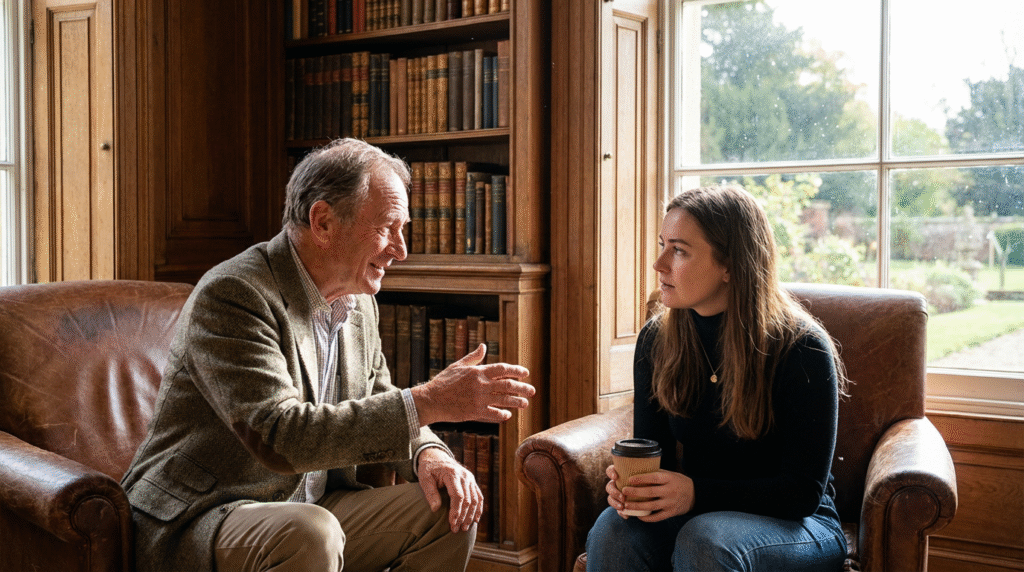
As generational wealth transfer accelerates globally, legacy planning has expanded beyond legal structures and trusts. Increasingly, UHNI families are delegating the education and preparation of heirs as a structured, long-term initiative.
This goes beyond traditional schooling. It includes curated exposure to mentors, controlled involvement in philanthropic initiatives, and tailored education focused on financial literacy, responsibility, and the psychological dimensions of wealth.
Legacy is no longer defined solely by what is passed on, but by how well the next generation is equipped to steward it.

4. Circadian Logistics and Performance-Based Travel
Travel delegation has evolved dramatically. The question is no longer how efficiently someone arrives at a destination, but how they arrive biologically.
High-performing individuals are now delegating circadian management around travel, adjusting sleep cycles, light exposure, nutrition timing, and environmental conditions before and after long-haul movement. The goal is not comfort, but immediate cognitive readiness.
Whether arriving for strategic meetings or high-profile events, the expectation is to function at full capacity without recovery time. Travel is treated as a physiological process, not a logistical one.

5. Ethical and Sustainability Due Diligence
Conscious decision-making has become a priority at the highest levels, but verifying ethical alignment across purchases, investments, and lifestyle choices requires extensive research.
UHNI individuals are increasingly delegating ethical and sustainability vetting. This includes evaluating supply chains, environmental impact, labor practices, and long-term sustainability commitments before acquisitions are made.
Rather than managing this due diligence personally, they rely on structured assessments that provide clarity and confidence, allowing values to be upheld without absorbing the investigative burden.
From Assistance to Strategic Partnership
Taken together, these shifts reveal a fundamental change in expectations. The modern UHNI is not seeking support for convenience alone. They are seeking relief from complexity.
Delegation has moved beyond execution into strategy. By transferring responsibility for health systems, privacy, legacy preparation, performance optimization, and ethical oversight, individuals reclaim what has become most precious: attention, presence, and mental clarity.
In this new model, luxury is no longer defined by what can be accessed, but by what no longer needs to be managed personally.